

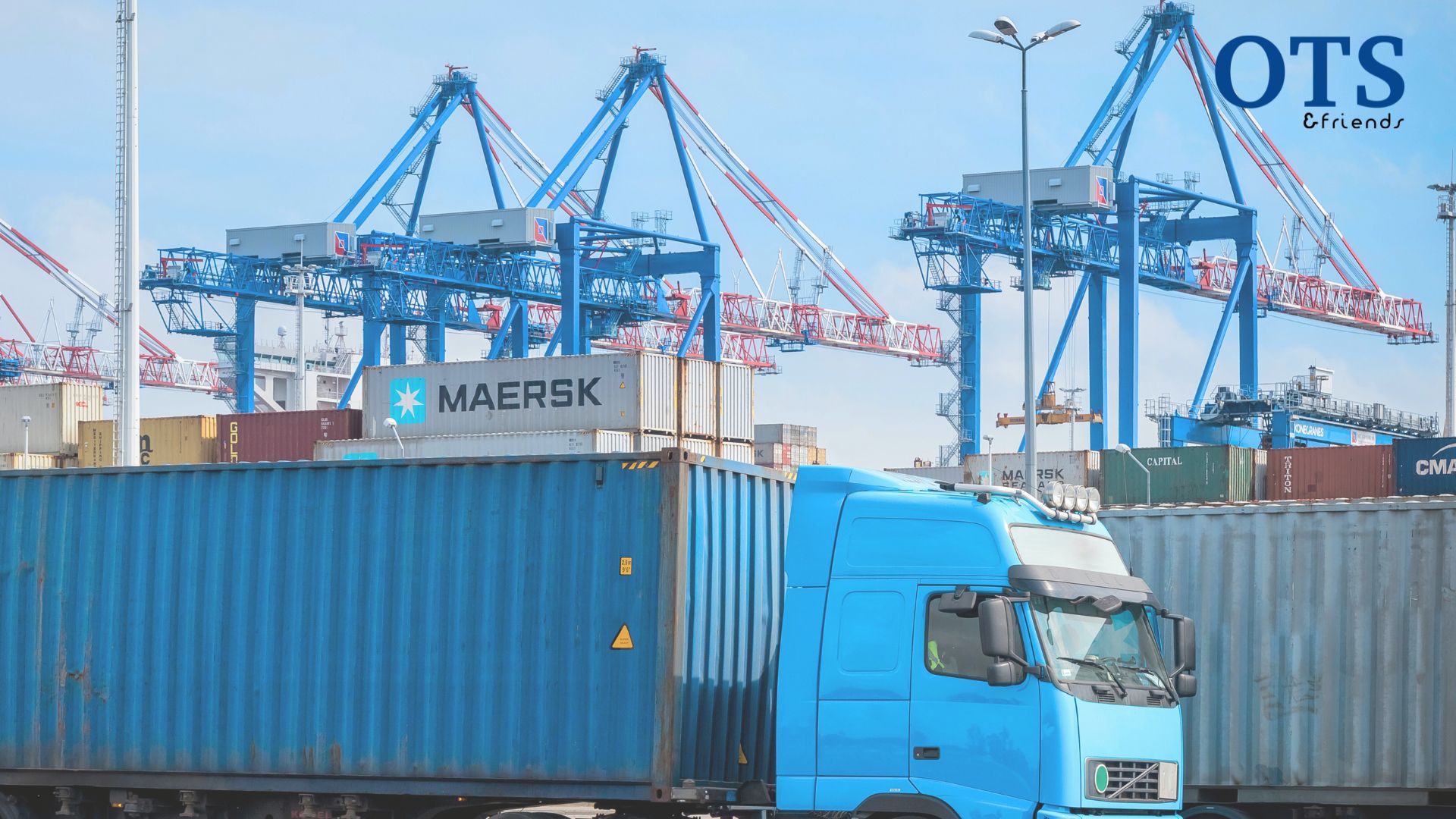
How rising cost pressure, increasingly complex port processes, and regulatory requirements are fundamentally reshaping container trucking between ports and customers. An operational perspective by Anton Sieg.
For a long time, container transport between seaports and customers was considered a relatively straightforward segment of logistics. Processes were well established, decision-making paths were short, and many challenges could be handled pragmatically. In recent years, however, this picture has changed noticeably.
Today, container trucking is far more influenced by organizational, technical, and regulatory frameworks. What used to be manageable through experience and routine now requires significantly greater coordination, control, and time investment.
One key factor is the change in terminal processes. In the past, containers could often be delivered directly to the Port of Hamburg. Today, additional prerequisites must be met. Before delivery, it must be verified whether the respective vessel has actually been released for handling. This information is provided digitally, for example through the systems of terminal operators such as HHLA or Eurogate.
While this digital control increases transparency, it also creates additional coordination effort in practice. Truck movements must be aligned more precisely with time slots, and short-notice changes are more difficult to implement. For trucking companies and dispatchers, this means finer planning and a higher dependency on system-based information.
At the same time, the growing digitalization of port processes has created new dependencies. Terminal software, slot systems, and authentication procedures are now central components of port operations. If system updates, maintenance, or disruptions occur, they can significantly restrict operations at individual terminals or across entire handling areas. The result is waiting times that directly impact available driving hours.
Longer dwell times at terminals reduce the effective transport capacity per vehicle per day. Drivers can complete fewer trips, planning becomes more challenging for customers, and the coordination effort for organizing units increases substantially.
In addition, structural cost factors have further burdened road freight transport in recent years. The expansion of toll charges, greater consideration of emission classes, and additional regulatory requirements have altered the cost base. At the same time, the density of roadside inspections has increased, making the profession of truck driver less attractive. Entry barriers are also rising, including higher costs for training and driver licensing.
These developments interact with one another. The container trucking market is not shrinking overnight, but it is gradually contracting. Smaller operators in particular are reaching economic and organizational limits, as operational effort is increasing faster than achievable returns.
Against this backdrop, collaboration models within the market are also changing. Many shippers and freight forwarders increasingly rely on organizing units or brokers that have access to broader trucking networks. By pooling capacities, disruptions, waiting times, and short-notice changes can be absorbed more effectively than within isolated structures.
Today, container trucking is no longer a purely executing transport service, but a coordination-intensive activity at the interface between port, road, and customer. Anyone seeking to manage this segment professionally must allocate sufficient time, attention, and flexible structures.
The market will continue to evolve. Requirements will rise and processes will become more complex. All the more reason to view container trucking as part of an integrated system — rather than as a simple transport from A to B.
If you have questions about our services, processes, or specific container trucking solutions, our experts Anton Sieg and Henry Ochs at OTS & friends are happy to exchange views with you.